Early professional life
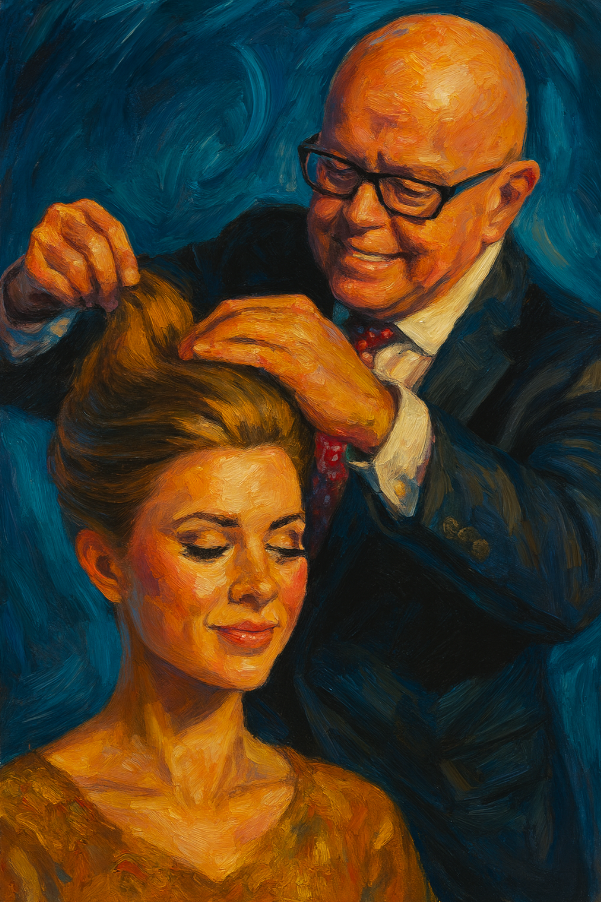
Martin Parsons’s commitment to hair began in childhood and quickly became vocational rather than incidental. Accounts from industry reporting note that Parsons knew by age eleven that he wanted to be a hairdresser, a conviction sparked by an early hair‑show experience and supported by family encouragement; this early exposure set him on a path toward formal training and platform work. He enrolled in professional schooling as soon as he could and gravitated toward stage demonstrations, where his combination of technical precision and an instinct for communication found a natural outlet.
Rise to prominence as an updo expert
Parsons’s reputation grew through a disciplined focus on technique and an unusual gift for teaching. He became known for translating complex long‑hair constructions into clear, repeatable steps that stylists could adopt in salons and on runways alike. Onstage, Parsons blended showmanship with pedagogy: his demonstrations were structured lessons designed to reveal the logic behind each move, converting mystery into muscle memory for attendees. That clarity of instruction—emphasizing foundations, directionality, and concealed anchoring—helped make elaborate updos both teachable and reliable under pressure.
Career and influence in the hair and beauty world
Beyond individual looks, Parsons’s most durable contribution was pedagogical. He built curricula, taught extensively around the world, and insisted that advanced methods be shareable rather than proprietary, a stance that broadened access to high‑level technique and raised professional standards across the industry. Colleagues and students consistently recall not only his technical innovations but also his warmth and generosity as a mentor; the industry response to his passing highlighted how deeply his teaching had been woven into contemporary updo practice. Over a long career he received recognition from peers and institutions and remained a sought‑after presenter whose classes drew standing‑room crowds.
Legacy and practical impact
Parsons’s legacy is procedural as much as aesthetic: he left behind a lineage of stylists trained to think in terms of engineered shapes, secure anchoring, and adaptable proportion. Those practical rules translate across bridal, editorial, and commercial work, making his methods useful in both everyday salon service and high‑pressure, high‑visibility assignments. The true testament to his impact is not only awards or honors but the everyday work of stylists who continue to teach and apply his methods, preserving a standard of craft that values both reliability and creativity.